Yacht Services St Barths; How to Repaint Your Boat Hull?
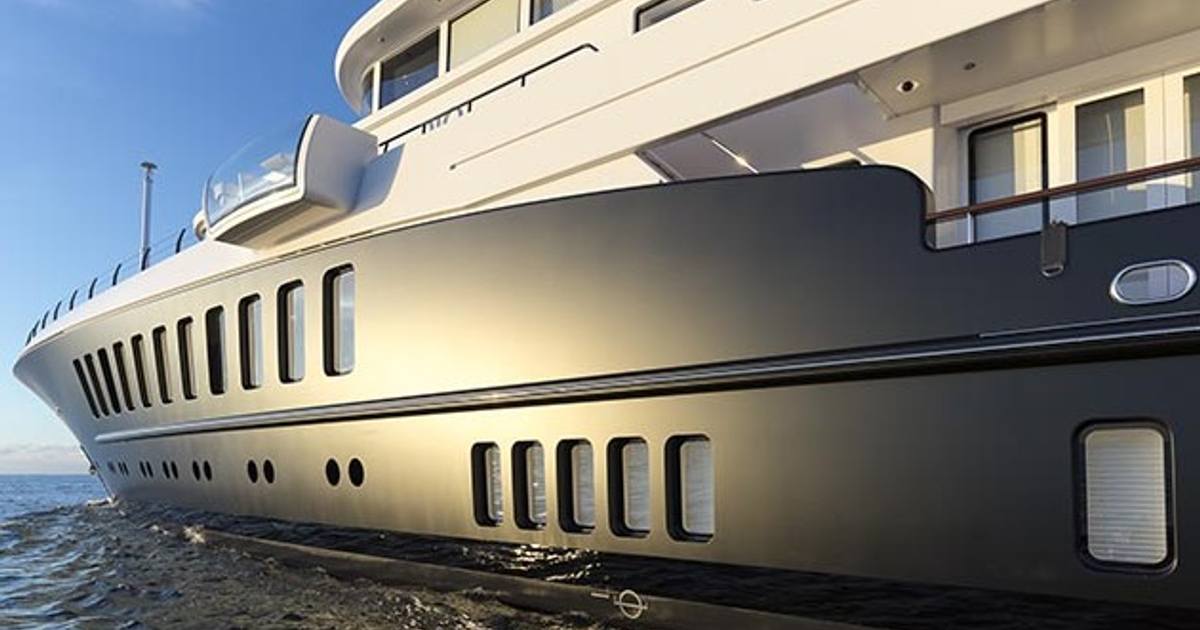
Over the years, the gelcoat or the original paint tarnishes, cracks, and becomes porous to such an extent that polishing can no longer restore its original shine. It is, therefore, necessary to consider a painting. But before applying it, you have to prepare the hull, which is the most important point; it represents 80% of the final work. Here are some tips to get you ready!
The Preparation of a Hull Covered With a Gelcoat or Paint
On a boat covered with gelcoat, cleaning, degreasing the hull, and possibly repairing shocks and cracks is necessary. Once the hull is clean, sand it with wonderful sandpaper (280-320), then remove all traces of dust with a cloth. If the gelcoat has already been painted, you must ensure that the paint adheres well to the hull and that the one you intend to apply is compatible with the one already applied to the boat. If in doubt, an adhesion test is carried out (read the paint manufacturer's recommendations).
Preparing a Steel or Alloy Hull
The same procedure is followed for a steel boat that has already been painted and whose paint is in good condition for a polyester hull (adhesion, compatibility). On a steel hull in poor condition, only one solution: to bring it back to bare, and this is done by pickling, disking, or sandblasting.
On an aluminum boat, the alumina which is deposited on the hull protects it. If you prefer painting, the preparation of the hull is much the same as for a steel boat; sandblasting is the most suitable solution.
On a steel boat that has already been painted and whose paint is in good condition, the same procedure is followed as for a polyester hull. On a steel hull in poor condition, the only solution: is to strip it bare.
Preparing For a Wooden Boat
Some products protect against rot and mold stains on wooden boats if the hull is wet. If the shell is painted, there are two solutions: if the paint has faded but is in good condition, we proceed to adhesion and compatibility tests; if it is in poor condition, it must be removed either by sanding or scraping or by burning with a blowtorch.
The Different Lacquers
There are two main families of lacquers: one-component and two-component.
Two-component lacquers are polyurethane-based and offer the advantage of being very resistant to bad weather and giving a high-quality end result. At the time of preparation, a hardener is incorporated into the base. The paint film is formed on the support by evaporation of the solvents and by a chemical reaction between the binders contained in the various components (polymerization).
One-component lacquers are either synthetic based on alkyd or acrylic resins. The former have good adhesion to the surface but average durability; the latter has excellent gloss and color retention. The one-component lacquer has a physical drying. One or other of the products can be used on polyester, steel, and aluminum hulls, but two-component lacquers give better results, especially over time.
On boats made of marine plywood, with glued sides or molded wood, a two-component lacquer can be used without any problem.
A Special Case of Wooden Boats
Wooden constructions, simple-edged or clapboard are flexible, and the wood tends to play; one-component lacquer should be used, which is more flexible than two-component. On boats made of marine plywood, with glued sides or molded wood, a two-component lacquer can be used without any problem.
Last Preparation, Whatever the Support
Before application, all areas and fittings that should not be painted must be masked and, in some cases, disassembled. The hull is perfectly prepared, and the fittings are hidden or dismantled; we can, at this stage, consider that the main work is done.
The Weather Conditions Required For the Application
If you work outdoors, the weather conditions must be favorable, and there must be no wind or risk of dust, but that is not enough. Two important points must be checked: the air's humidity percentage and the temperature.
If humid air is subjected to a drop in temperature, for example, at nightfall, this humidity may be higher than the maximum that the air can hold at this new temperature; the excess humidity will condense and falls into dew, a frequent phenomenon in summer and synonymous with a beautiful day, but not for repainting a boat. The application can only be made at a certain temperature given in the specific product sheets, and too high a temperature decreases the viscosity causing a risk of dripping. Excessive humidity at the time of application can lead to chalking with a matte appearance for certain glossy topcoats.
For application in a covered place, it is necessary to ensure the air temperature and humidity. It is easier to control the temperature in a closed hangar but be careful. To avoid thermal shocks, they must be constant throughout the room. If you use a heater, avoid gas that diffuses moist heat and forced air if there is a risk of dust.
If you work outdoors, the weather conditions must be favorable; there must be no wind or risk of dust. It is also necessary to control the humidity of the air.
The Right Tools
Brushes, rollers, and pads are the main tools of amateurs. The pneumatic gun, which makes it possible to obtain a perfect finish, is reserved for professionals or experienced amateurs who have mastered this technique perfectly.
For brush application, use a wide model with long, soft bristles. The technique crosses the layers with a diagonal movement from left to right. In order to blur all brush marks, the final coat is applied with light, vertical brush strokes. The ideal way to obtain a good finish is to work in pairs; the first paints, as we have just seen, and the second smooth it immediately using a pad. The pad, used vertically to prevent the paint from running, is only used to smooth, not to apply. You can also use a roller, provided you take it in very dense foam and with small cells. The roller deposits less product than a brush, so you must apply more layers. In order to complete the finish, it is recommended to smooth the last layer with a brush or a pad. This smoothing must be done immediately after application, with the two painters working side by side.
Visit the mangomangosbh website, as we are the best Yacht Broker St Barths. We offer our customers the ultimate level of services for Yachts, Villas, and their astute owners and guests.


.jpg)
Comments
Post a Comment